App Store optimization vs SEO: two search systems, one product
ASO improves discovery and decision-making in the Apple App Store and Google Play. SEO makes web content understandable and reachable in search engines. Mixing them usually means measuring the wrong outcome.

A store search result is more than a keyword. Name, subtitle, description, category, imagery, ratings and the quality of the product shape a decision made in seconds. Apple explicitly describes text relevance and user behaviour as search factors, while Google Play connects store presence with product quality.
Web SEO works with crawlable pages, internal links, canonicals, structured data and a clear information architecture. A website can explain a difficult use case in depth. A store page has to prove the same value with far less room.
Where ASO starts
ASO starts by defining the problem for which an app should be found in a particular store and market. Metadata, visual narrative and localization follow from that decision. A keyword is not decoration: it needs to match the feature, audience and product shown.
The product page also has a conversion job. Visibility without understandable screenshots or a credible description is of limited value. Store impressions and install steps therefore belong in the same working cycle as keyword decisions.
Where SEO takes over
SEO answers questions that cannot fit into a store description: comparisons, process, technical requirements, privacy, support and detailed use cases. Useful web pages lead readers to the appropriate product or contact page without copying the store listing.
Multilingual sites need a written version for every indexable language, a self-referencing canonical and correct hreflang links. Automated word-for-word pages without real market fit do not solve that problem.

ASO starts by defining the problem for which an app should be found in a particular store and market. Metadata, visual narrative and localization follow from that decision. A keyword is not decoration: it needs to match the feature, audience and product shown.
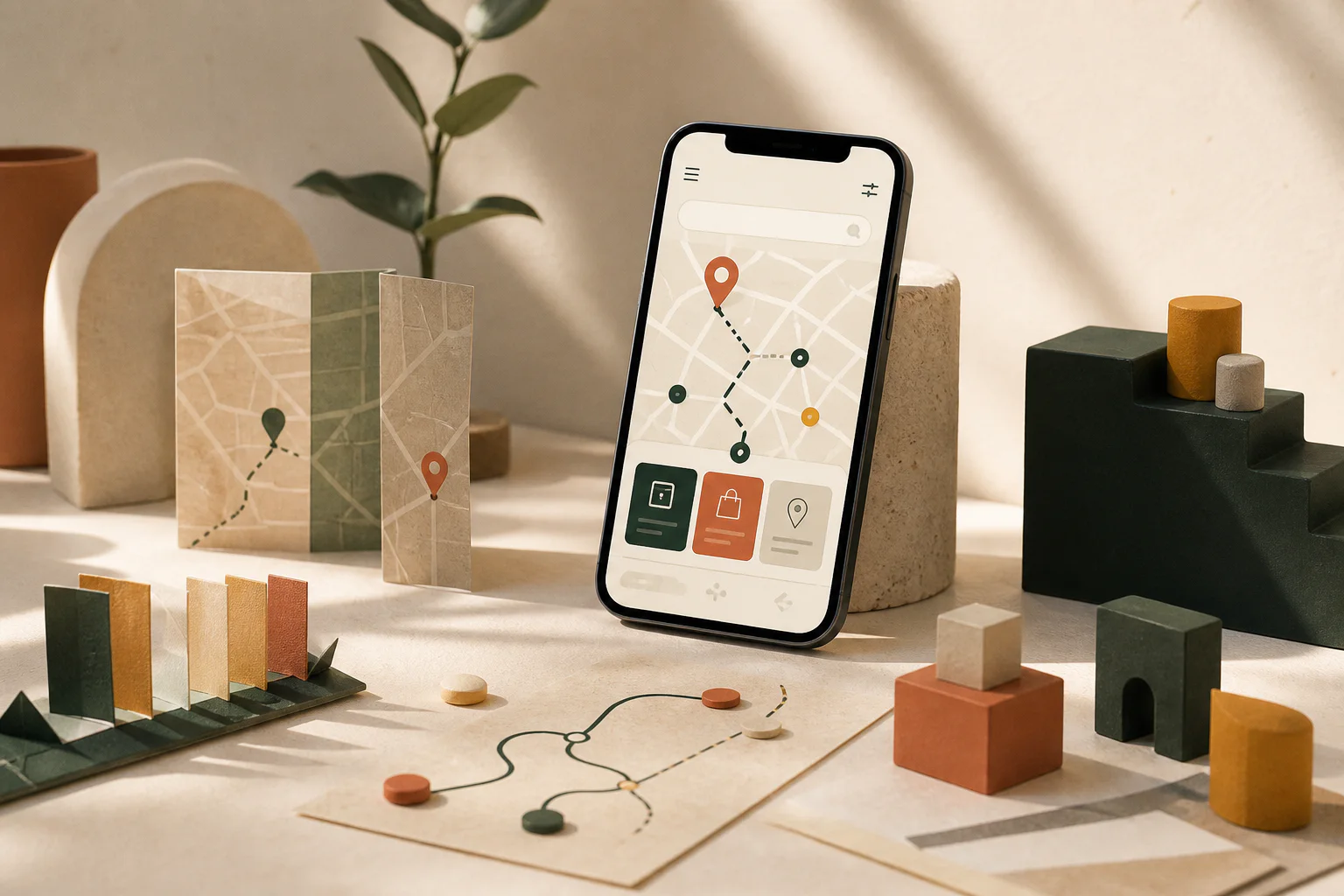
SEO answers questions that cannot fit into a store description: comparisons, process, technical requirements, privacy, support and detailed use cases. Useful web pages lead readers to the appropriate product or contact page without copying the store listing.
What the disciplines share
Both start with intent and go beyond keywords. Relevance, plain language, credible product evidence, useful images and a working product form the shared foundation. Platform rules, available fields and measurement are different.
A shared topic model helps: the product team supplies real functions and vocabulary, ASO condenses them for the store, and SEO explains them on the web. Website, app and support then tell the same story without duplicating content.
A practical division of work
For a new product, define the core journey first. Then build the store position, web landing page and measurement plan. For an existing product, start with current search terms, store data, support questions and points of user drop-off.
No serious process guarantees a rank. It creates traceable hypotheses, testable changes and a sound technical base from which search systems and people can understand the offer.
ASO or SEO: where does the work belong?
This split keeps tasks and expectations clear.
- Store search, metadata and product pages: ASO
- Explanatory websites, indexability and internal links: SEO
- Screenshots, value proposition and localization: plan together
- Installs, store conversion and variants: measure in the store
- Web clicks, indexed pages and qualified enquiries: measure on the web
One product, not two disconnected stories
Steingraf Labs connects store presence, website and product development in one working model. Research becomes metadata, imagery, useful pages and the next release—not another slide deck.
View the related serviceReviewed primary sources
Platform rules change. Each guide therefore links to the official material behind its technical statements.